A SPECIALTY WITHIN DATA CENTER ADVISORY
Liquid-cooling
readiness advisory.
Connect a high-density compute proposal to the facility and the people who will operate it.
Discuss your cooling project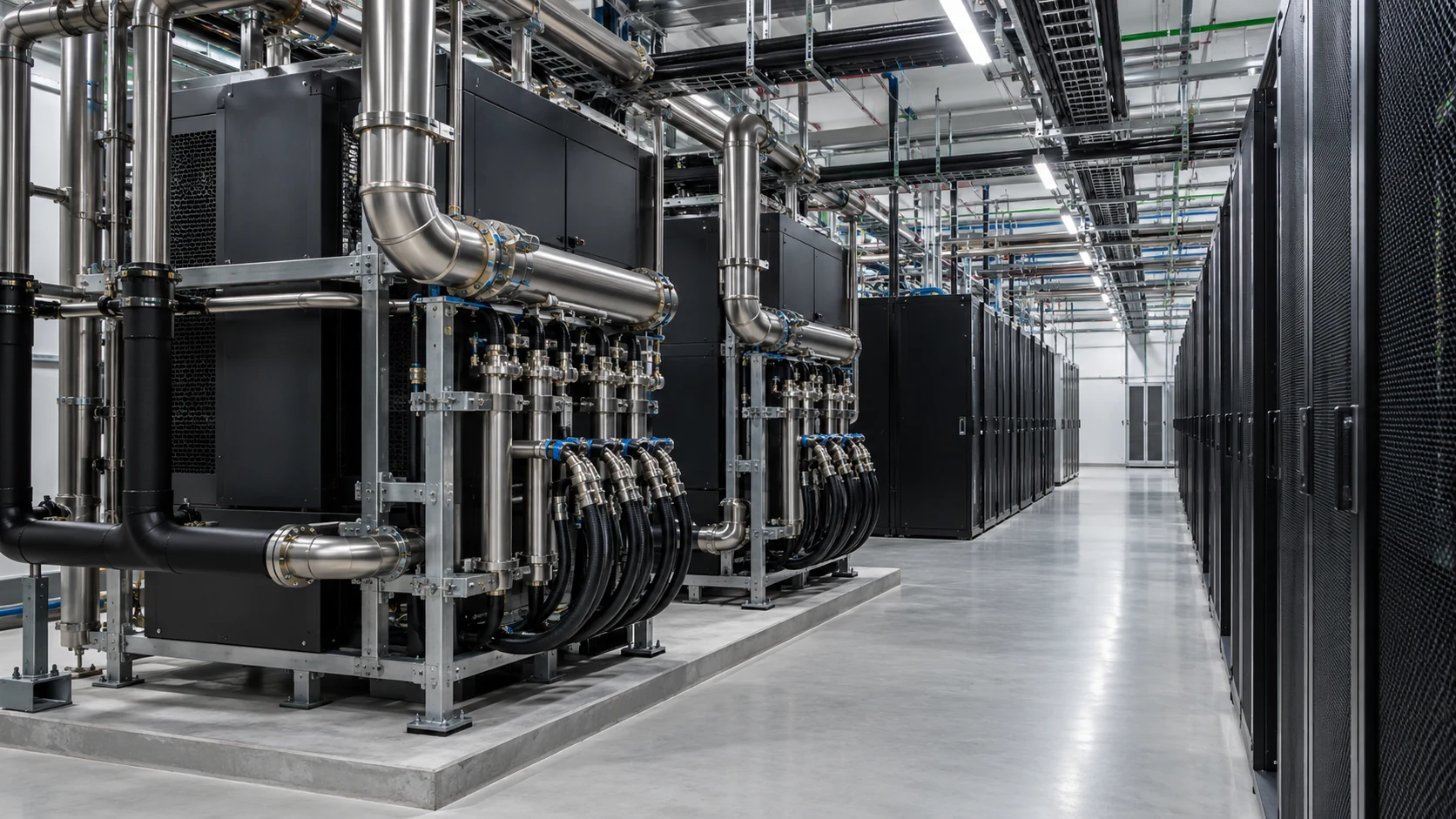 LIQUID-COOLING INFRASTRUCTURE · ILLUSTRATIVE
Facility interfaces · Operating readiness · Project handover
A proposal can describe the cooling equipment without resolving what your site needs to change. Before an HPC or high-density deployment moves ahead, make the facility interfaces, operating responsibilities, information gaps, and handover requirements visible.
Our experience includes liquid-cooling distribution across a 13,000-square-foot data center for direct-to-chip/CDU and rear-door heat-exchanger use, alongside five HPC supercomputer installations.
The requirement behind the proposal
Organize the proposed compute and cooling requirements, installation assumptions, vendor documents, and unresolved decisions into a shared starting point. Identify which requirements the responsible engineers, equipment vendors, and site team need to validate.
Facility interfaces and dependencies
Review the available picture of facility-side connections, existing infrastructure, power and cooling constraints, monitoring interfaces, and access. Establish which data is current and where further technical investigation belongs.
Maintenance and service ownership
Map the boundaries between the site team, equipment supplier, installer, and specialist service partners. Bring routine maintenance, consumables, replacement components, support arrangements, and escalation into the same discussion.
Operating procedures and team readiness
Identify the procedures, training, monitoring information, incident practices, and documentation that the operations team will need. Compare the intended operating model with the resources and responsibilities available today.
Installation within a working facility
Review sequencing, change approvals, site access, affected services, and coordination requirements with the project parties. Make the dependencies that affect an operating environment explicit before the implementation sequence is agreed.
A usable handover
Define the records, procedures, training, ownership decisions, and open-items register needed by operations. Identify the completion and test evidence to be supplied by the appropriately responsible project parties.
A readiness brief connecting the proposed deployment to the facility’s operating context.
An interface and responsibility register identifying owners, assumptions, and evidence still required.
A prioritized sequence of questions, technical follow-up, and operating preparations.
A handover checklist and stakeholder review to clarify the next decisions.
HOW WE WORK
Bring the right questions forward.
Frame the deployment
Agree the proposed workload, cooling approach, project stage, and decisions that need support.
Connect the evidence
Review available facility records and vendor requirements with the relevant project and operating teams.
Identify the gaps
Bring unresolved interfaces, ownership questions, and technical follow-up into a clear action register.
Prepare the next step
Review the readiness brief and agree what needs to be established before the project advances.
When should we bring in an advisor?+
An engagement can be useful while evaluating a proposal, defining an upgrade, coordinating installation, or preparing for handover. Earlier discussion makes it easier to identify assumptions before they become project dependencies.
Can this include an existing data center?+
Yes. Existing infrastructure, operating practices, capacity information, and service constraints can be reviewed alongside the proposed deployment. The available records and agreed scope determine how far the assessment can go.
How does this relate to engineering and equipment selection?+
The advisory engagement organizes readiness questions, operating implications, responsibilities, and next actions. Equipment-specific engineering, design validation, acceptance criteria, and testing remain with the appropriately qualified project parties under an agreed scope.
Can we combine this with a facility audit?+
Yes. A facility assessment can establish the infrastructure picture while advisory work connects it to the proposed cooling deployment. The combined scope should follow the decision your team needs to make.
Before liquid cooling, ask the operating questions
Use the audit preparation checklist
A broader infrastructure concern? Explore our data center facility audits or data center advisory.
YOUR NEXT DECISION
Let’s put clarity
to work.
Tell us what’s happening at your facility.
We’ll start with the questions that matter.